
We can’t all be heroes...
because somebody has to sit on the curb and applaud* when they go by --Will Rogers

As soon as I accept an invitation to give a talk, I build the spine. I need a place to park ideas and think about things until I am ready to try and build a cohesive story. For example, in Japan there are options more resonant with how we build data storytelling. The hero’s journey for example does not map the way my brain works.
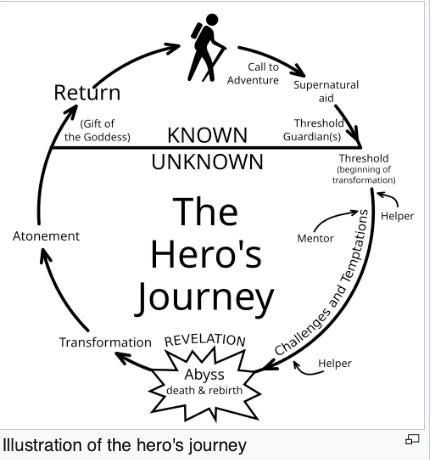
Think about the difference like this.
Hero’s Journey: man conquers the universe
Kishotenketsu: man learns to live in harmony with universe
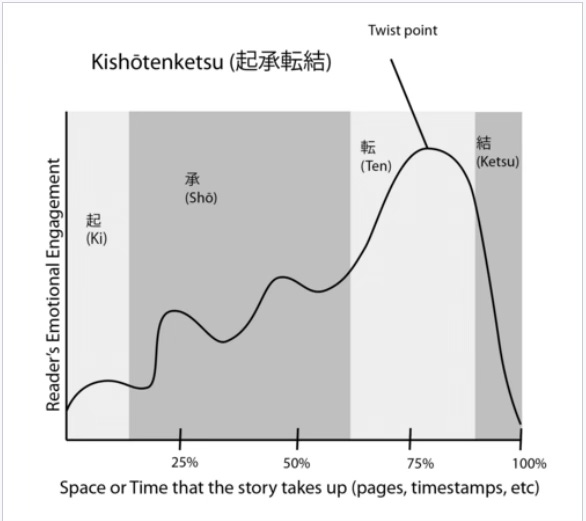
I dig deeper in another talk but ever since I began understanding the foundation of storytelling outside the usual — I listen and observe differently.
I rely on Cesium Ion for a lot of assistance in building 3D environments. I was hoping to share a bit of this from their conference stage but probably because I decided not to continue the developer program — too busy with project work — they no longer rely on me. I was not invited.
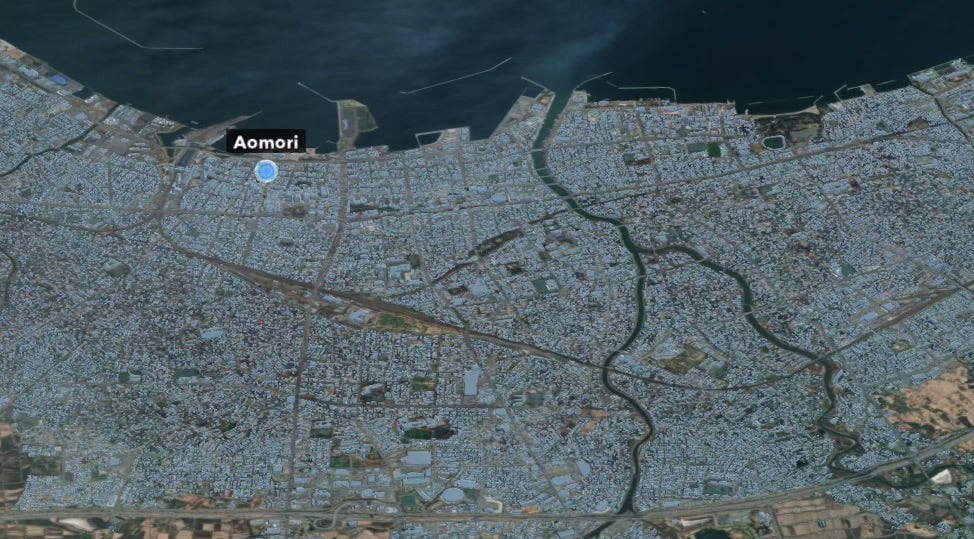
But I did want to share what I am building to share from the stage at FOSS4G Hiroshima.

I trained an AI agent to keep the code I created updated with the bear sightings in Japan. I like visual studio code because it never gets in the way. I am sensitive to wanting control of the workspace. I am using GitHub Copilot using GPT-5.3-Codex. It is a simple task (relatively) not needing parallel specialization like pipeline/timeline logic or information on rendering or performance.
Why build an agent? You can bundle the automation and repetitive tasks.
I always create an .md file when working with or creating an AI agent. Although they are technically markdown files (go ahead—open one up) but when you engineer your own agent it is the long-term memory and context manual. I asked the agent to create a ready-made prompt pack in the repo so as I build a story I have some bread crumbs to follow out of the forest.
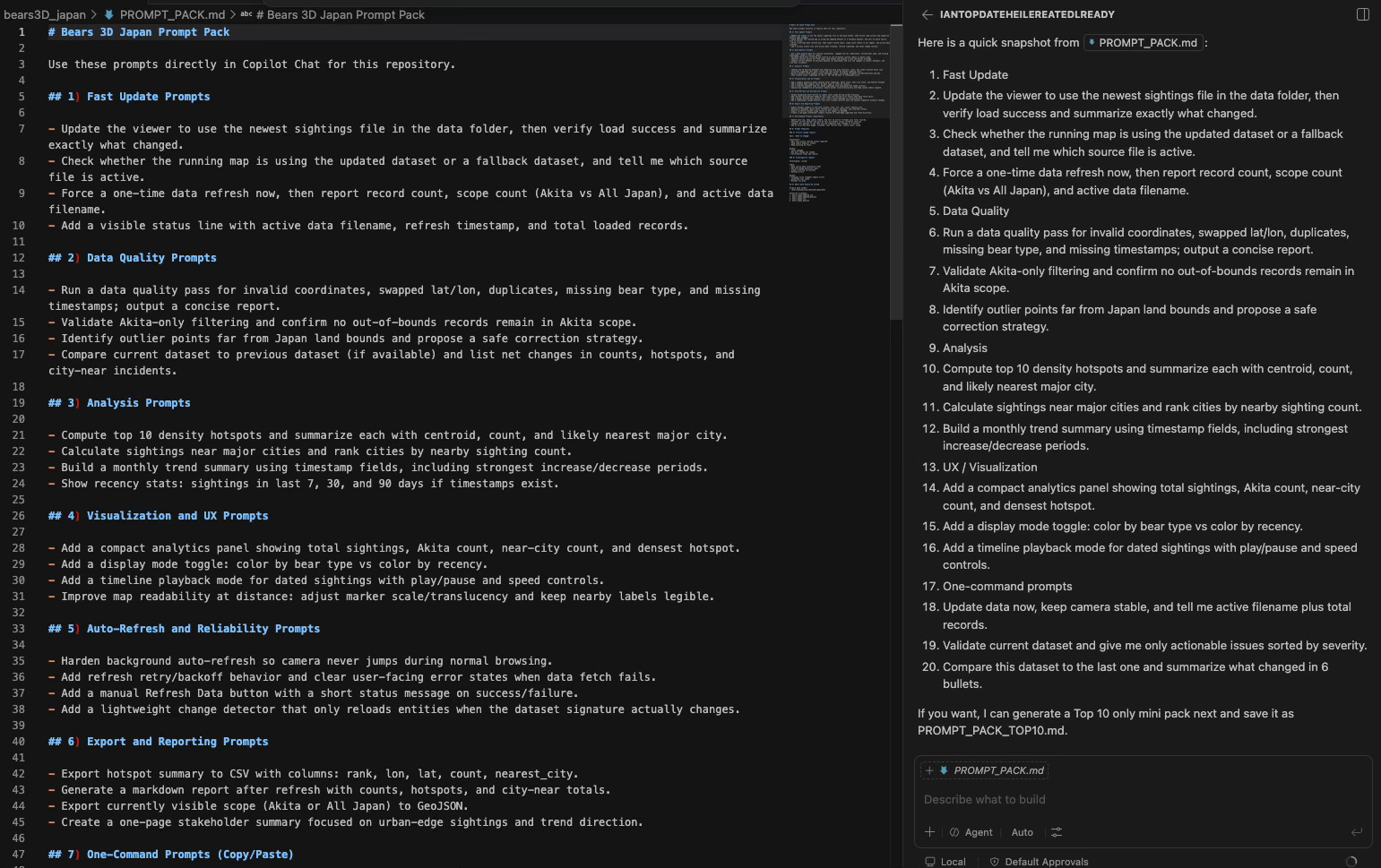
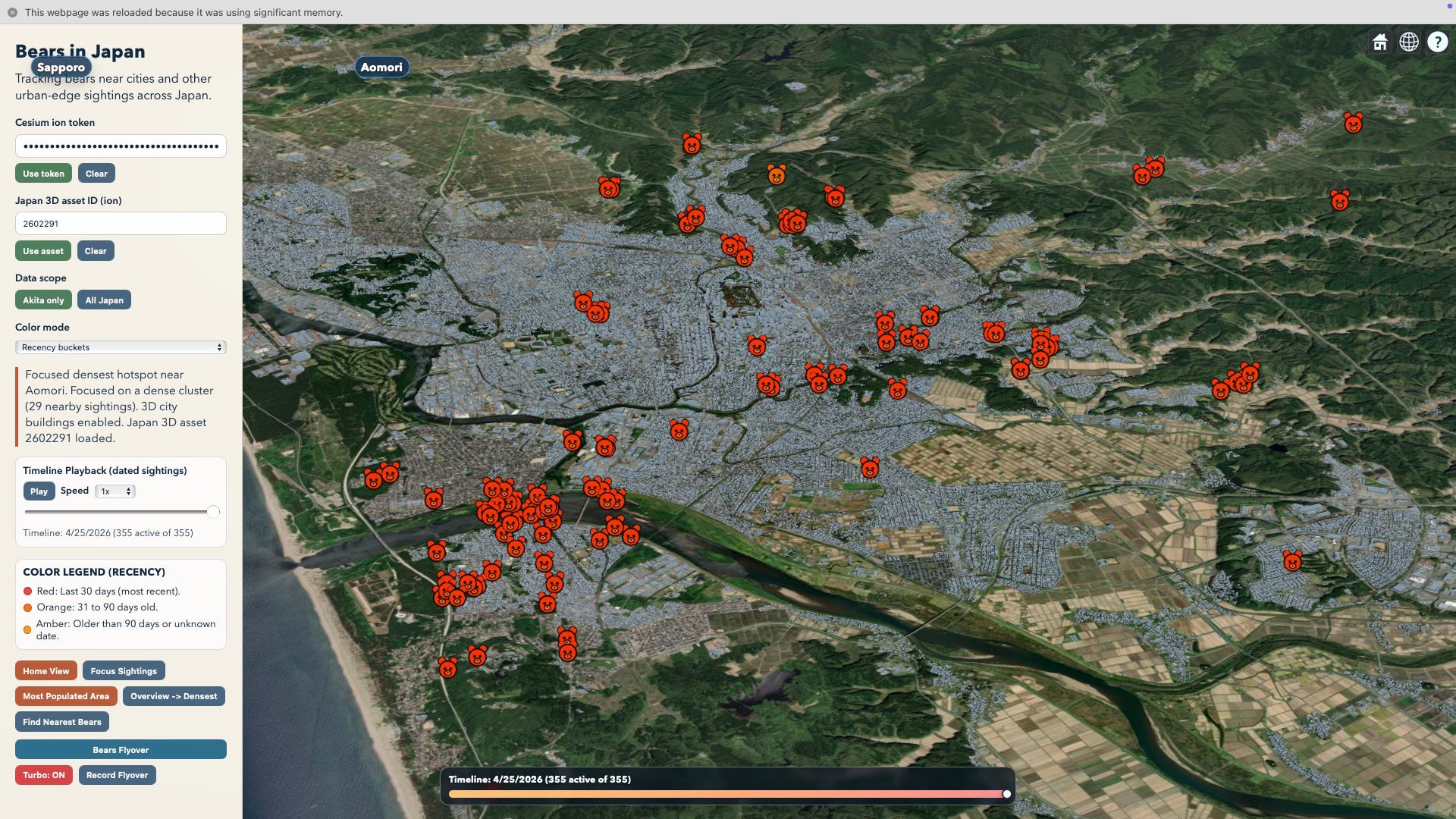
Here is one of the renderings for my talk titled, Drawing the Lines: Visualizing the role of climate change and urbanization shaping human-bear interactions in Japan
The buttons on the lower left edge represent different prompts for me to explore as I build the talk. You can ask the agent to build a button for quicker review.
I also recommend checking in with your agent to see if your objectives are aligned. Ask your agent about its priorities.
Highest-priority tasks for me on this project are: What I like about the list? It is an easy way to check how my prompts and directives are being assimilated. Your agent should be following your specifications and instructed to freely admit when it doesn’t understand something or is unable to fix a problem. A big cautionary tale comes from agents that are fixated on pleasing and are adept at masking errors or inaccuracies.
Keep data current with minimal friction
Auto-detect newest dataset first.
Refresh in background without requiring repeated prompts.
Clearly report which dataset is active.
Protect viewing continuity
Avoid camera jumps during refreshes.
Keep dense bear regions visible and recover if focus becomes sparse.
Preserve smooth flyover behavior.
Preserve map readability and trust
Ensure sightings remain visible (no accidental “all disappeared” states).
Keep color modes correct and explainable (bear type vs recency).
Keep city context visible when needed (labels/buildings/hotspot context).
Fix breakages before adding features
Prioritize bugs that block core use: loading, visibility, navigation, playback.
Validate changed files for errors after edits.
Avoid risky or unrelated refactors.
Follow project-specific operating rules
Focus edits on active runtime behavior.
Minimize prompts unless genuinely blocked.
Use safe, non-destructive changes.
Click to subscribe.
You can also become a paid subscriber. Think of it as clapping*…
