

Place and location are the bread and butter of geospatial thinking. In my brain I think of location as the coordinates and place pulls in the context. More of the map is not the territory thinking.
Fundamental to any tool you prefer is the idea of building out a story. Your perspective and experiential journey is unique to you and this is the spice of effective storytelling. And the way forward as tech threatens to limit human contemplation in favor of scale and speed.
Think of Goya’s dog.
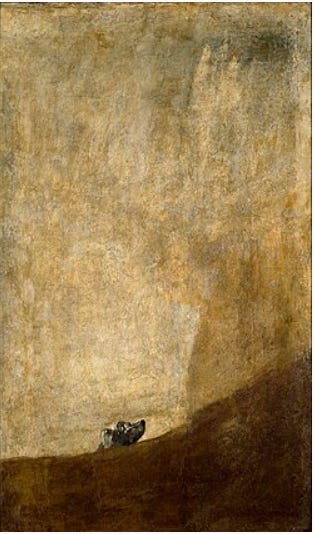
Painted on the walls of his home, we have assigned names for the painting based on interpretations long after Goya’s death. Most of them have the dog in peril. When I first saw the painting I saw a sweetness and vulnerability of a small dog in a vast unknown perhaps environment. Add a few stars in that sky and I am right along with El Perro. I never thought he was drowning or about to swept away in quicksand. You bring to the picture your own you-ness.
Many of us have used building data over the years. A dataset I like is the historic building data where we can see building footprints of structures demolished or significantly altered since 1991 and updated frequently.

I create several options within workshops so attendees can explore what interests them. We step through popular tools but in time-structured environments we often end up in GeoLibre—a newly emerging dynamic platform by Quisheng Wu.
Aside: if you use his vast library of tutorials why not make a one-time or continuing donation?
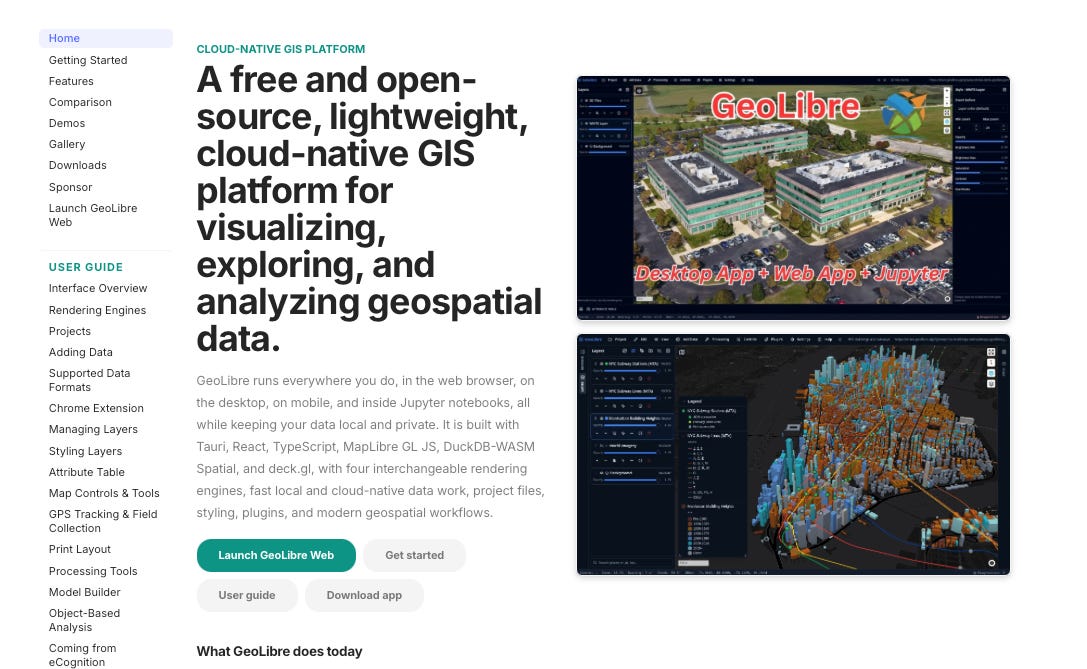
Briefly introducing you here to the dataset, we can download the geojson file and upload to GeoLibre.
Below I am looking at a specific building that includes the option to see the environment by using Google Maps or Mapillary to explore “place”.


I randomly zoomed in on a building to visualize.
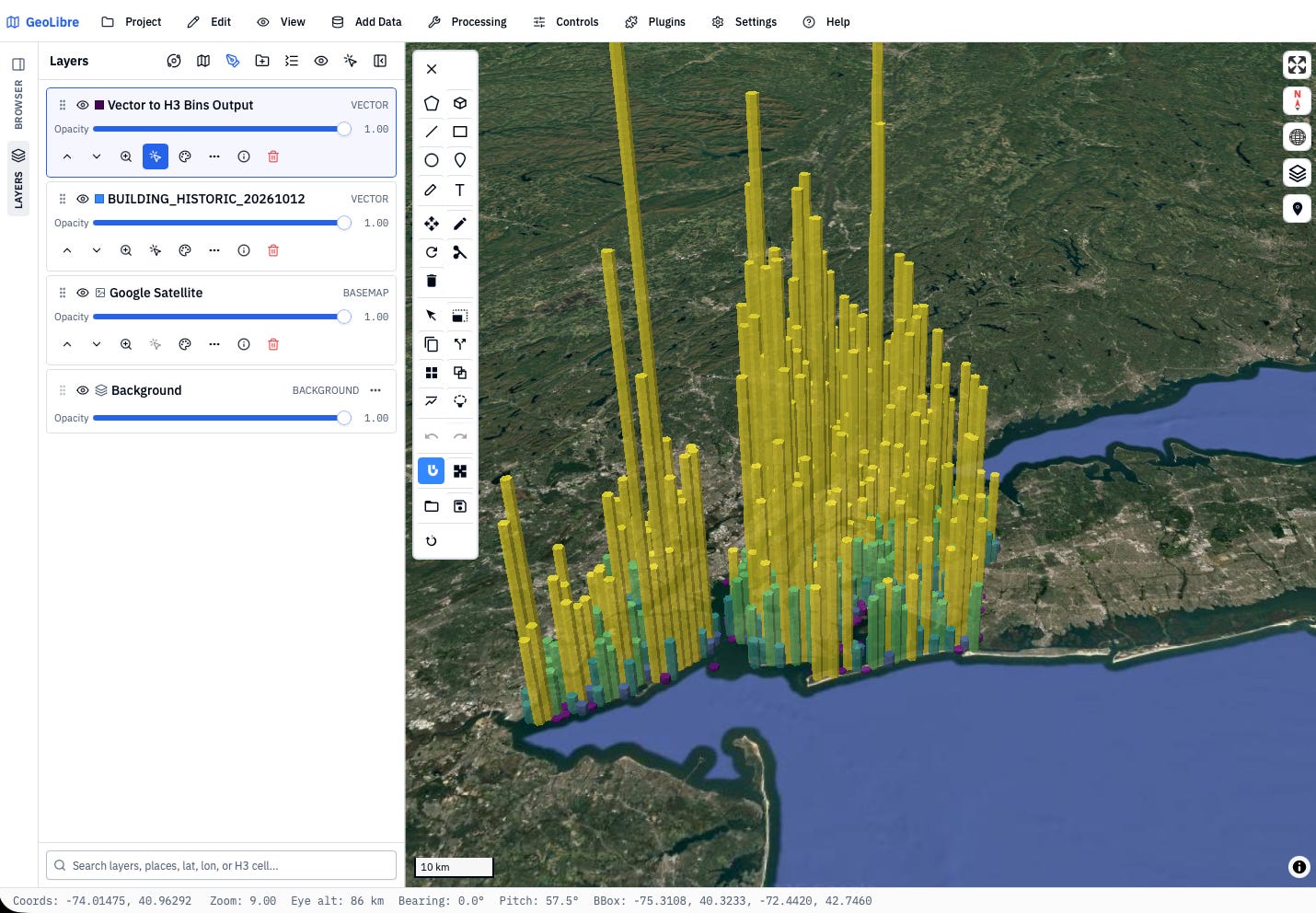
You can also use H3 binning in GeoLibre to look for patterns. Where are most of these properties located?
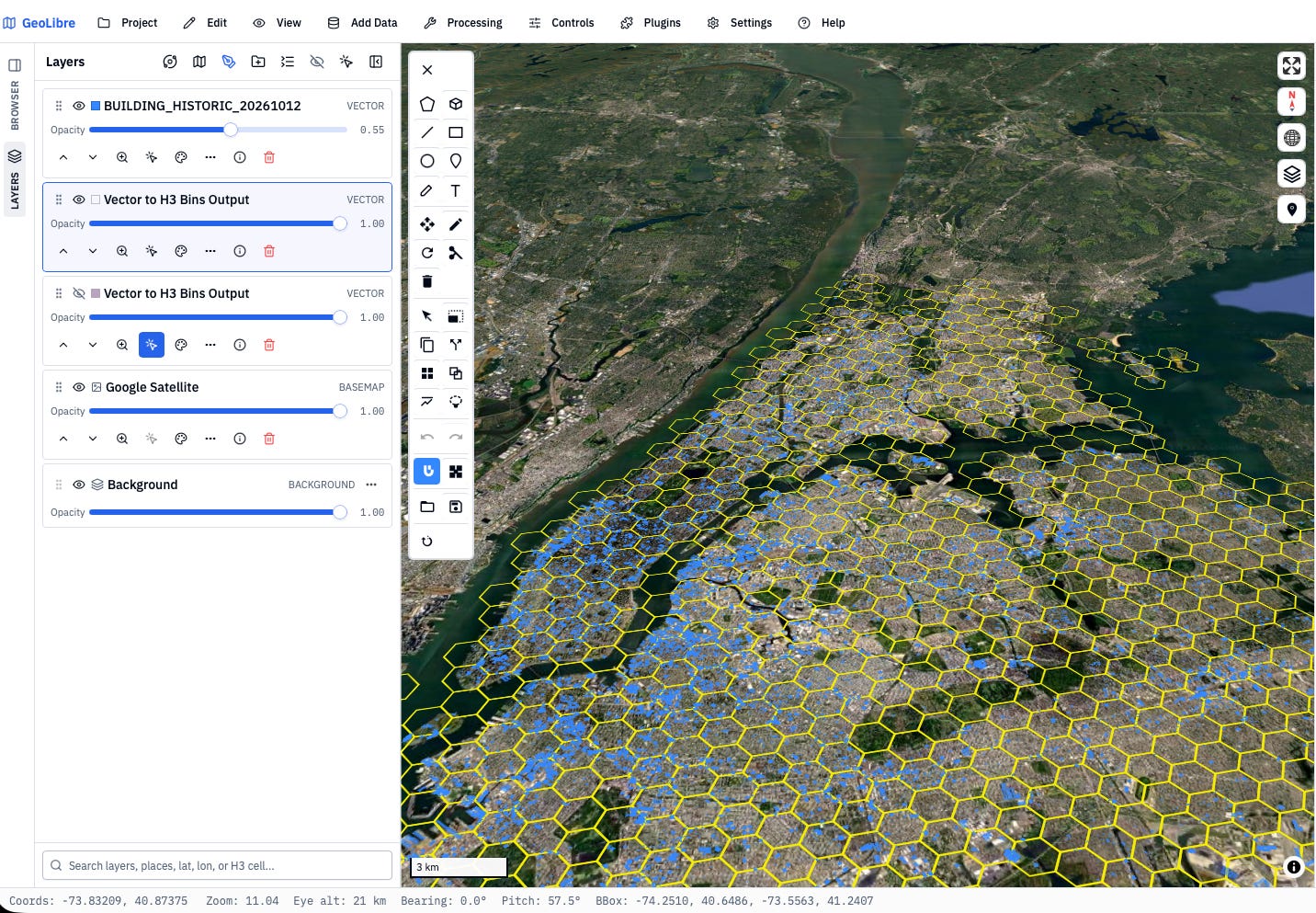
Very straightforward once you add your data to Layers.
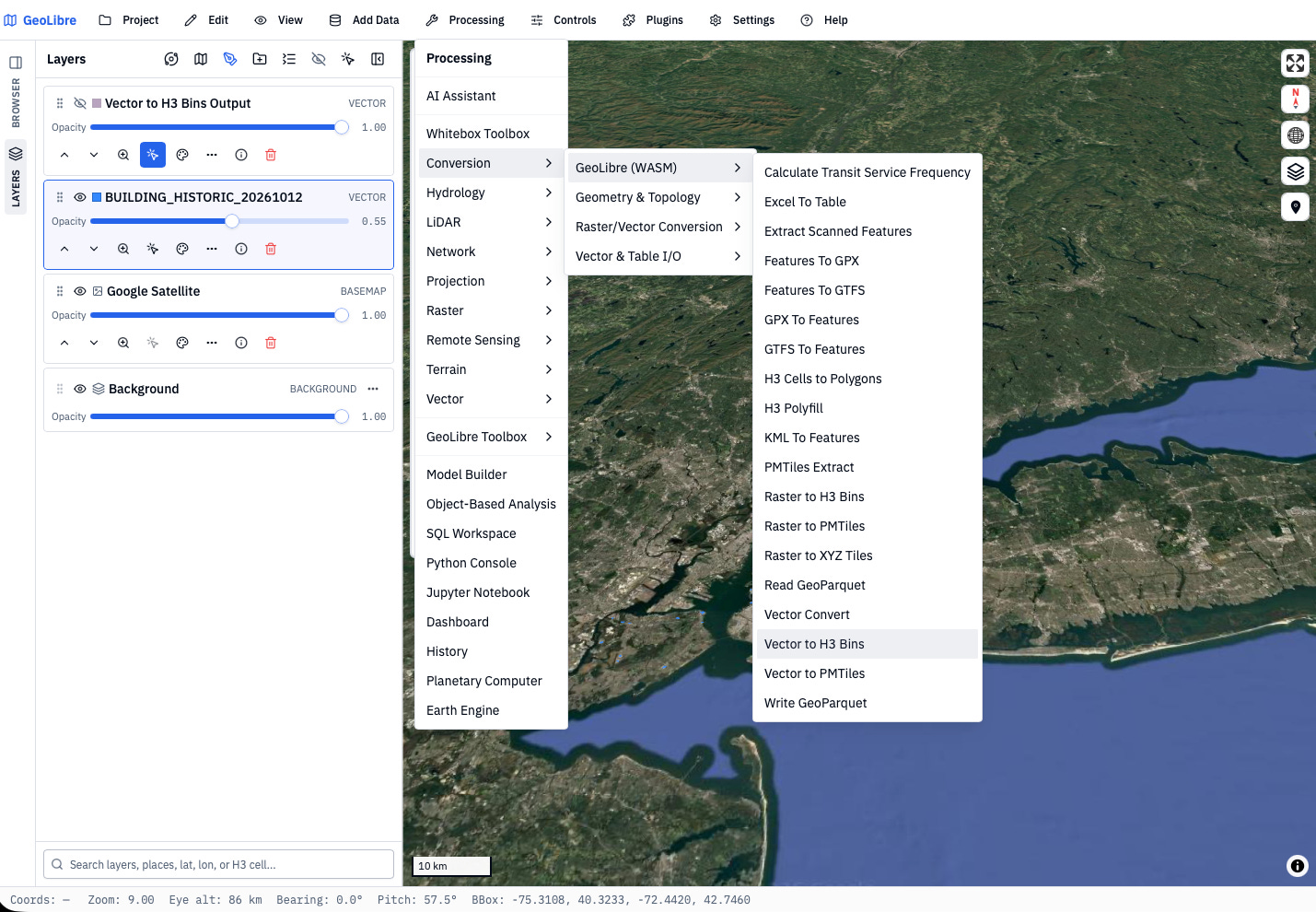
By extruding in 3D space, you are able to identify the regions of more intensity and build additional stories from there…
Special thanks to Qiusheng Wu for building GeoLibre and Ujaval Gandhi for the quick video and reminder of features included in GeoLibre.